When a ship flies a given flag, the owner accepts an implicit deal: in exchange for the protection and rights that flag provides, the owner commits to meeting t
When a ship flies a given flag, the owner accepts an implicit deal: in exchange for the protection and rights that flag provides, the owner commits to meeting the international safety, environmental and operational standards that registry requires. The Flag State Quality Control Audit (FSQCA) is the tool flag states use to verify that this deal is honoured in practice, not just on paper.
Many owners treat the FSQCA as a bureaucratic formality. Handled correctly, however, it is an opportunity to catch weaknesses before a Port State Control inspector does — with consequences that are far more costly in terms of detention, delays and reputation.
What an FSQCA Actually Verifies
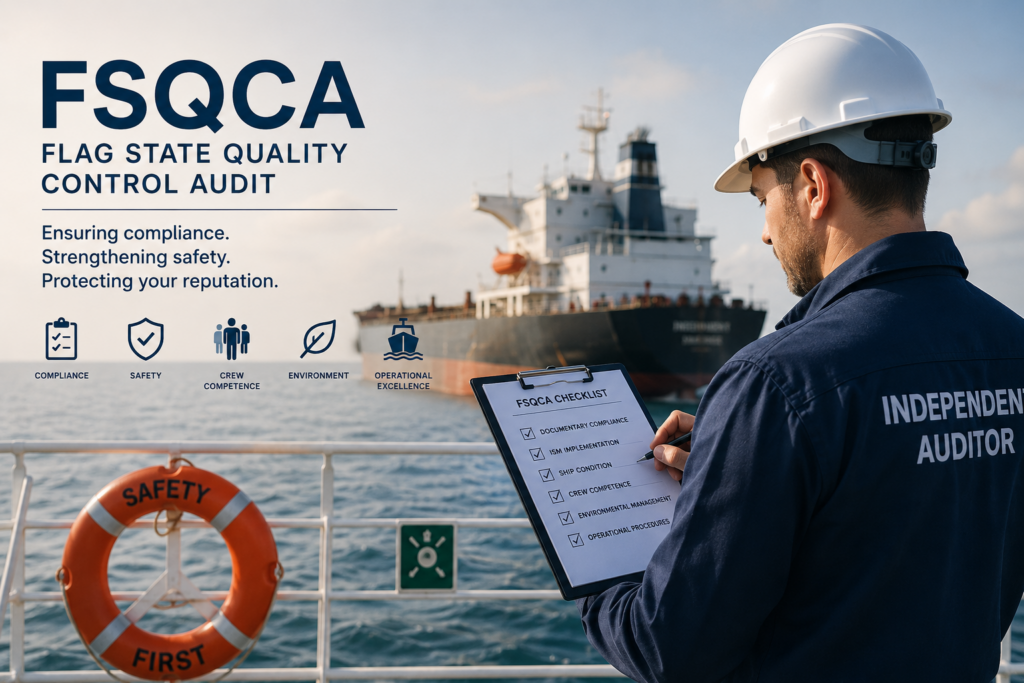
An FSQCA audit does not simply check that certificates are in order. Typical areas under review include:
- Documentary compliance: statutory certificates, SMS manuals, and onboard logs that are up to date and consistent with one another
- Real-world ISM Code implementation: it is not enough for procedures to exist — the crew must actually follow them
- The ship’s material condition: structural integrity, safety equipment, fire-fighting and life-saving systems
- Crew competence: STCW certification, and familiarity with the ship’s specific emergency procedures
- Environmental management: MARPOL compliance, waste and bilge water management
The Role of the Independent Auditor
One often-overlooked distinction is between an audit carried out by the registry’s own staff and one entrusted to an independent auditor appointed on the flag’s behalf. In the latter case, the owner benefits from:
- An external, conflict-free perspective, more likely to catch non-conformities that eyes accustomed to the ship might miss
- Genuine operational competence: an auditor with a background as a master or HSQE manager can tell the difference between a formal non-conformity and a real operational risk
- Action-oriented reporting, with findings ranked by priority rather than a plain list of deviations
How to Prepare
Ships that come through an FSQCA well tend to share a few habits:
- Logs and records are kept up to date in real time, not just before the inspection
- Drills and exercises are carried out regularly and properly documented, not only when required
- The DPA (Designated Person Ashore) is genuinely involved in day-to-day management, not just a name on paper
- Previous Port State Control deficiencies are treated as issues to be closed structurally, not patched over
In Summary
A well-managed FSQCA is not an obstacle — it is a check that protects the owner from far more serious risks: a detention, an incident, a loss of class. Working with an independent auditor with hands-on command and fleet management experience turns a regulatory obligation into a genuine prevention tool.
Marine Surveyor Consultant Sagl is an authorised inspector on behalf of international flag registries (Palau, IBS Panama, Liberia, Malta) and provides independent FSQCA, HSQE and ISM audit services across Europe.